
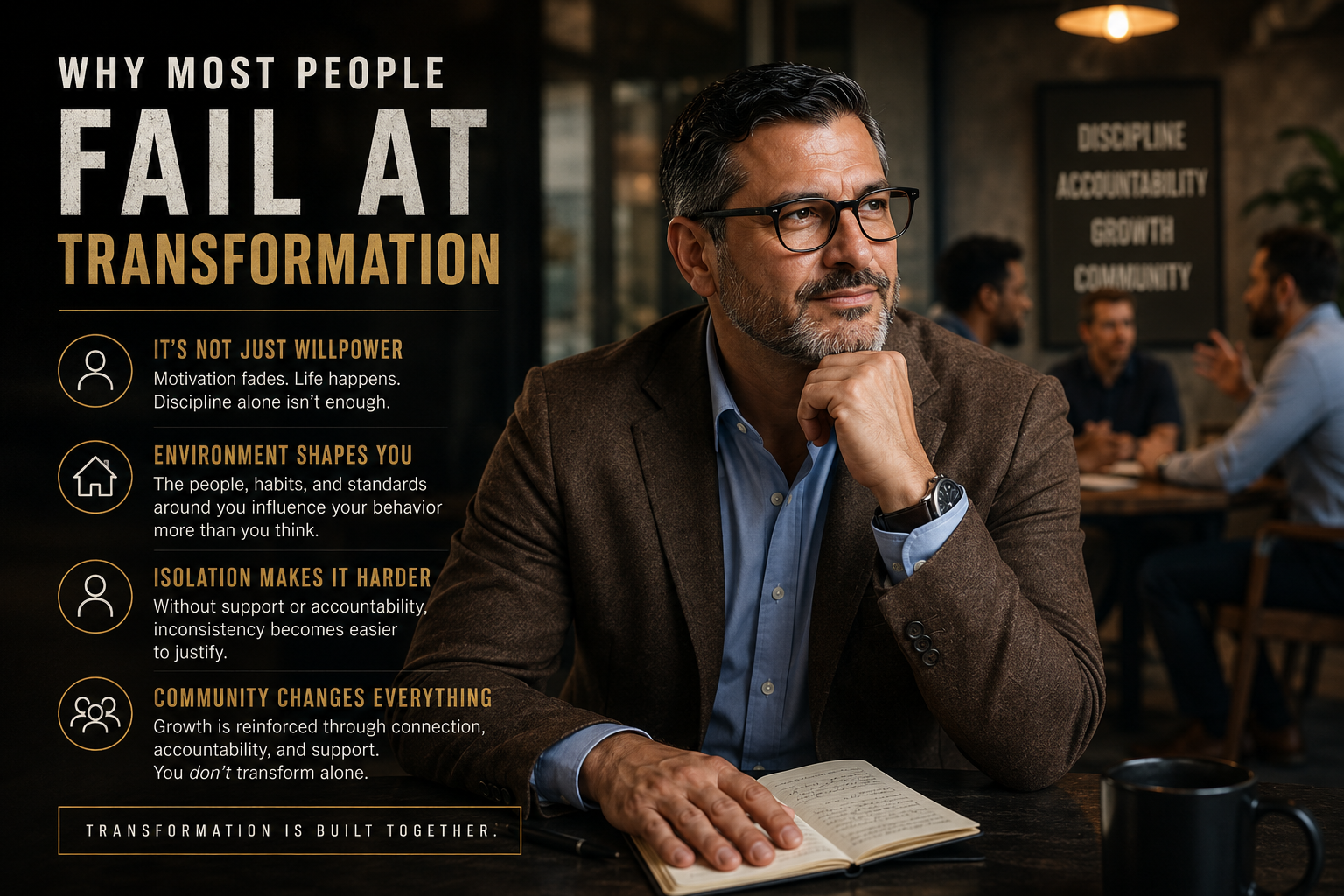
Most people approach transformation as a personal challenge. They believe that if they can become more disciplined, more focused, or more motivated, their life will eventually change. So, they set goals, create routines, buy books, listen to podcasts, and convince themselves that this time will be different.
And for a while, it usually is.
At the beginning, change feels exciting because motivation creates momentum. People wake up earlier, start exercising, begin journaling, or commit themselves to new habits. There is energy behind the decision, and that energy creates movement.
But motivation is not the same thing as transformation.
Real transformation is what happens after the excitement fades and life starts applying pressure again.
Why Motivation Eventually Fades
Eventually life returns to normal. Work becomes stressful again. Responsibilities pile up. Fatigue sets in. Distractions come back. And slowly, most people drift toward the same behaviors they were trying to escape.
This is usually the point where people begin blaming themselves. They tell themselves they lacked discipline or simply were not committed enough to the process.
But many times, that is not the real issue.
The bigger problem is that most people are trying to transform themselves while staying fully connected to the same environment that reinforced their old habits in the first place.
People want a different life while remaining surrounded by the same conversations, same routines, same thinking patterns, and same influences that kept them stuck before.
That is a hard battle to win.
The Influence of Environment
Environment shapes behavior more than most people realize.
The people around us, the standards around us, and the habits we constantly see all influence how we think and act. Over time, those things become normal to us whether they are helping us grow or holding us back.
If distraction, negativity, inconsistency, or unhealthy habits are part of your daily environment long enough, those patterns eventually start feeling acceptable. You stop noticing them.
The opposite is also true.
When people are surrounded by accountability, discipline, growth, and consistency, those standards begin shaping behavior too. Growth starts becoming normal instead of uncomfortable.
This is why some people completely change when they enter a different environment. The environment changes what they expect from themselves.
Why Isolation Makes Transformation Harder
This is one of the reasons isolation makes transformation so difficult.
When people try to change completely alone, there is often nothing reinforcing the behaviors they are trying to build. There is nobody helping them stay accountable when motivation fades. Nobody challenging the excuses that slowly creep in. Nobody helping them regain perspective when they start slipping into old routines again.
Over time, inconsistency becomes easier to justify.
One missed day turns into several. Small compromises start stacking together. Eventually the vision people had for themselves starts fading because nothing around them is reinforcing it consistently.
This is why transformation rarely happens through willpower alone.
Willpower fades. Pressure exposes habits. And isolation gives old patterns room to return.
The Power of Reinforcement
Real and lasting change usually happens when people become connected to environments that support the growth they are trying to create.
Strong communities reinforce standards. They normalize accountability. They create support systems that help people keep moving forward even when progress feels slow or difficult.
Throughout history, people have always grown through connection with others. Families, teams, communities, mentorships, and organizations have always shaped human development.
Growth has never been purely individual.
Even the strongest people are influenced by the people around them.
Why Community Changes Everything
The problem is that modern culture encourages people to handle everything on their own. Many people isolate themselves while trying to rebuild their life, believing strength means carrying the entire process alone.
But isolation often amplifies the very patterns people are trying to overcome.
People grow faster when they are surrounded by others who reinforce growth, accountability, consistency, and progress. They grow faster when they are part of an environment that supports the person they are trying to become instead of constantly pulling them back toward the person they used to be.
Transformation absolutely requires effort, discipline, and consistency. But it also requires connection.
Because most people do not transform in a vacuum. They transform through reinforcement, accountability, support, and community.
Join The Community!
Welcome to a community that transforms with you.
> Learn More
—

 About The The Transformation Circle
 About The The Transformation Circle
You Don’t Have to Transform Alone
You’ve been doing the work. Reading the books. Listening to the podcasts. Journaling at 5 AM. And you’re making progress—but it’s slow, lonely, and sometimes you wonder if you’re even moving in the right direction. Here’s what you’re missing: other people on the same path. Transformation isn’t a solo sport. The breakthroughs happen faster, go deeper, and actually stick when you’re surrounded by people who get it—who are asking the same hard questions, fighting the same inner battles, and committed to becoming more.
> Learn More